According to global military strength evaluation data, Egypt’s military continues to rank as the largest military force in the Arab world, both in terms of active military personnel and the volume of weaponry and equipment used for military operations.
According to the latest report from the international military analysis organization Global Firepower, Cairo continues to maintain its position as the number one military power in the Arab world and on the entire African continent, with approximately 450,000 active-duty troops stationed. Beyond these frontline forces, they also possess strategic reserve forces that can be mobilized up to double this number immediately during an emergency.
The strength of the Egyptian military does not rely solely on manpower; the government in Cairo has actively pushed forward national defense modernization programs in recent years.
Egypt has shifted to a strategy of acquiring weapons from diverse sources, including French Rafale fighter jets, Russian Su-35 fighter jets, modern German and Italian warships, and American M1A2 Abrams main battle tanks.
Equipping themselves with weapons from multiple nations gives them strong air and naval defense capabilities, particularly in safeguarding the strategic area around the Suez Canal.
Looking at other Arab nations with significant military influence following Egypt:
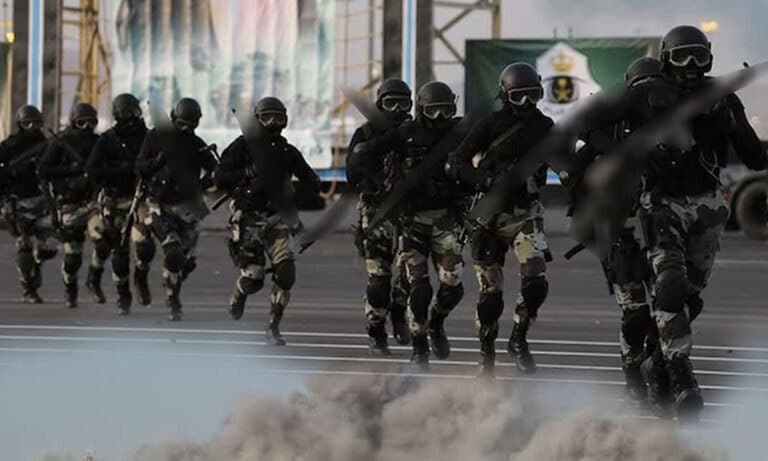
The Kingdom of Saudi Arabia, despite having a smaller active troop count (around over 250,000 personnel), ranks as the country with the highest defense spending budget in the Middle East region to purchase the latest modern weapon technology from the West.
Additionally, Algeria and Iraq are also Arab countries with large militaries that play crucial roles in maintaining the regional balance of power.
However, security analysts from the media outlet Eventer Medya noted that while having diverse weapon supply sources provides foreign policy advantages to Egypt, it also creates severe pressure and challenges for military logistics.
These include difficulties in maintenance work as well as the integration of a unified command system between NATO and Russian Chinese technologies, which have completely different formats.